I left Gibraltar when I saw the rock cloud or the Lavente winds. Meaning the winds that blow from eastern Mediterranean Sea. The winds are channeled through straits between Spain and 🇲🇦 Morroco .
I was warned about the threat of ORCA whales around the straits of Gibralta. They tend to attack small sail and fishing boats, going for their rudders. Even sinking some boats in the process of killer whales attacks! ORCA’s aren’t actual Whales technically but large dolphins. Highly intelligent and live in pods of family groups. Cetaceans is correct name of whales and dolphins.
I remember a few years ago I did special trip to Sea Cortez from San Diego with English wildlife photographer and naturalist Mark Carwardine on small motor vessel. We saw whole range of Whales and sea lions from Grey to Blue Whales. That said I have still not see ORCA whales in the sea.
On leaving Gibraltar I decided to cross over to Morocco keep close to the coast and head out into the Atlantic Ocean to pick up the northerly trade winds to blow me south to Lanzarote. The Trade winds are actually part of large North Atlantic gyre that circulate around the planet clockwise in the northern hemisphere. The oceans slowly circulate around in similar fashion slowly. The centre of this gyre is the high pressure system of the Azores. High pressure think it’s like big mountain of warm air . Low pressure systems are the opposite like big valleys that need to be filled in quickly. High pressure of low wind speeds and fine weather.
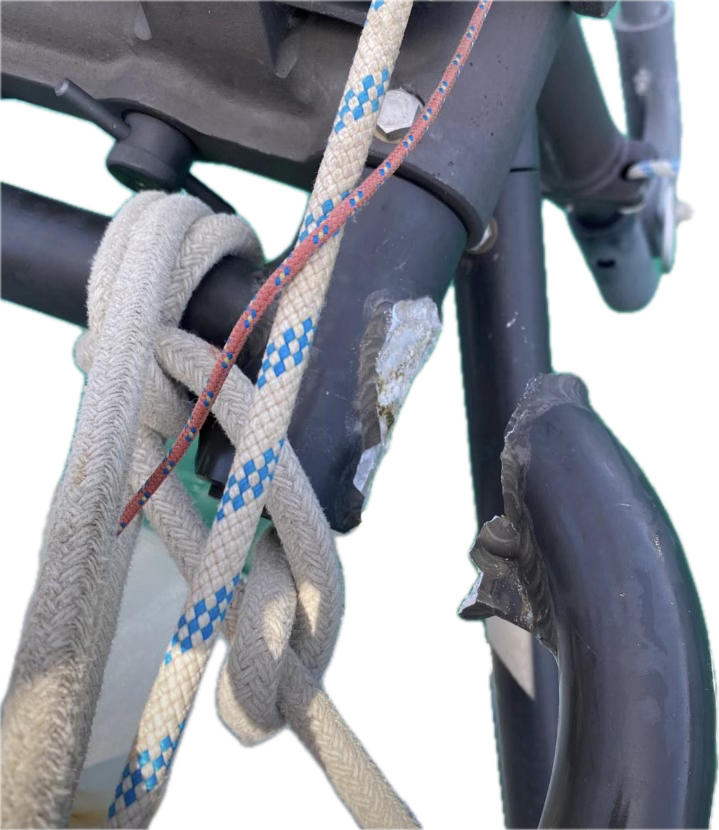
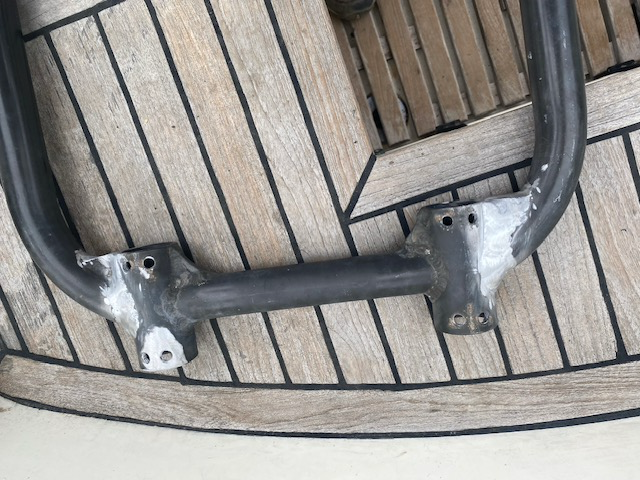
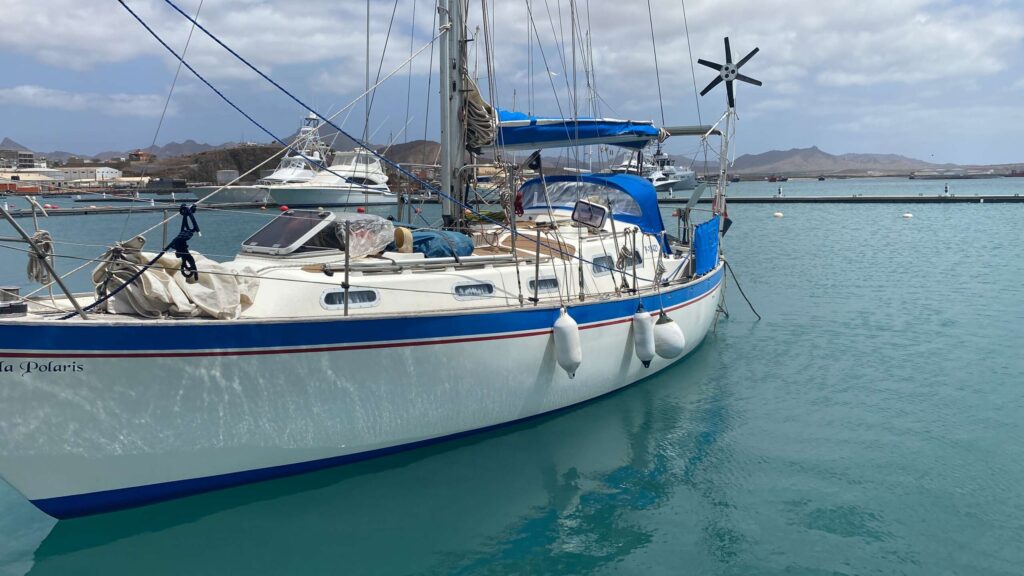
The trade winds kick in from the Iberian peninsular. Meaning they are great for running down wind towards the Canary Islands and on to Cape Verde Islands off west Africa. When I arrived in Lanzarote I moored up Puerto Calero, just west of Puerto Del Carmen popular with Brits. I had a Spanish lady join me for few days of sailing. Plan was to sail to Tenerife and back to Lanzarote unfortunately the day we planned to leave a small speed boat ran into the back of Stella Polaris due to windy conditions. It snapped one of welds of my wind-vane self steering system
Izzy and I sailed south from Lanzarote on the east side of Fuerteventura headed out west to Tenerife winds were perfect for good sailing. We sailed past Gran Canaria to our port and headed to the north eastern part of Tenerife to the anchorage of Punt de Antequera. Which turned out to be well sheltered with good holding. It was still was quite windy when we left the following morning. Unfortunately we couldn’t make for northern Fuerteventura because of adverse winds. We decided to make for southern Fuerteventura. Still we were still too close to the wind so we motor sailed. Having share the helming because my autopilot couldn’t cope with the waves bashing into side of Stella Polaris to keep on course. After few hours Izzy mention going into Gran Canaria the capital Las Palmas. I said we could still make Southern Fuerteventura? She told me her brother and his partner lived in Gran Canaria not far from Las Palmas.
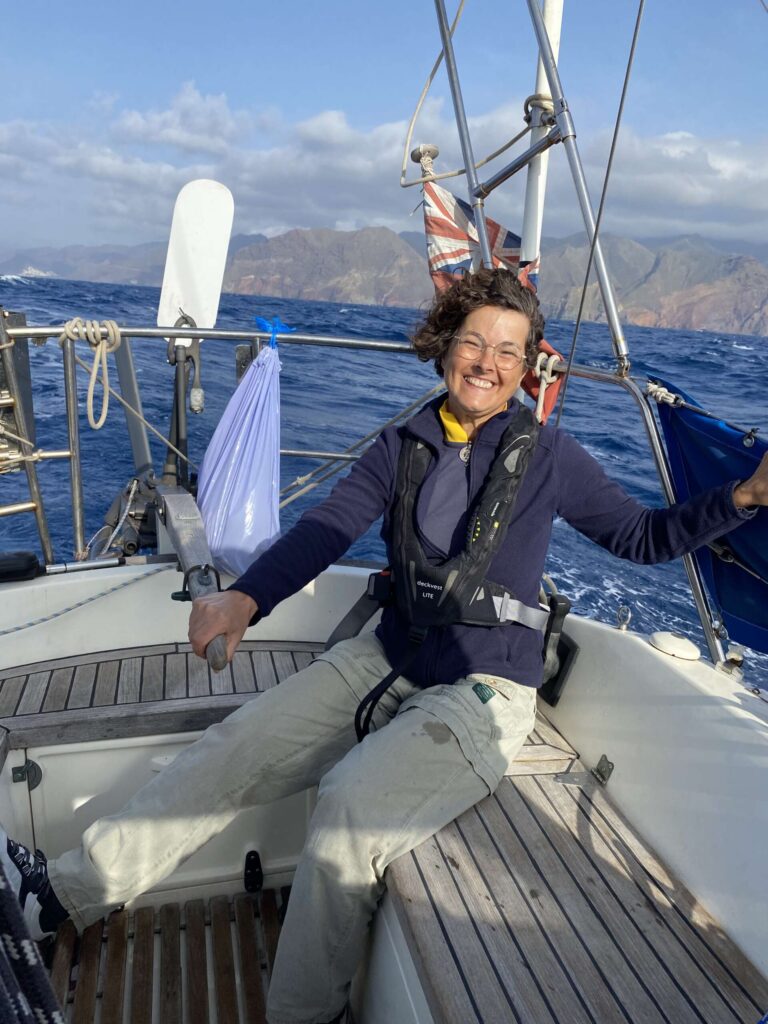
Izzy treated us both to nice meal when we arrived at Las Palmas marina fairly late in the evening. Next day she left and her brother and partner picked her up. I felt rather disappointed that we couldn’t make Lanzarote. But the winds dictate your sailing passages. It worked out well for me as Las Palmas has good yachting facilities. I was recommended an excellent Aluminum welder called Sunny a nice Bulgarian ex sailor. He did a great job of the repair weld. Which fortunately was covered by my boat insurance company Pantaenius.
Once the repair was completed and I had ensured I had plenty of food and water onboard I left Gran Canaria headed south west to Cape Verde island made towards Sao Vicente to the capital of Mindelo. I had great sail with wind speeds averaging 18 to 20 knots over the 8 day sail to Sao Vicente.
The Cape Verde islands were discovered by the Portuguese explorers in the mid 1400’s. The 10 islands were uninhabited. The Portuguese started the European slave trade to the America’s specifically to Brazil 🇧🇷. The Portuguese felt with African tribal leaders where slavery was a common commodity.
The local people here throughout the Cape Verde are of black African extract. Of varying degree of black pigmentation. The Portuguese under the auspices of Prince Henry the Navigator discovered Azores, Madeira , Cape Verde, Dakar, Sao Tome, Angola, Cape Town. Set up trading places in Goa, Calcutt and went as far as China and Japan. They went on to be great traders and sea man in their wooden sailing ships called a Caravels.
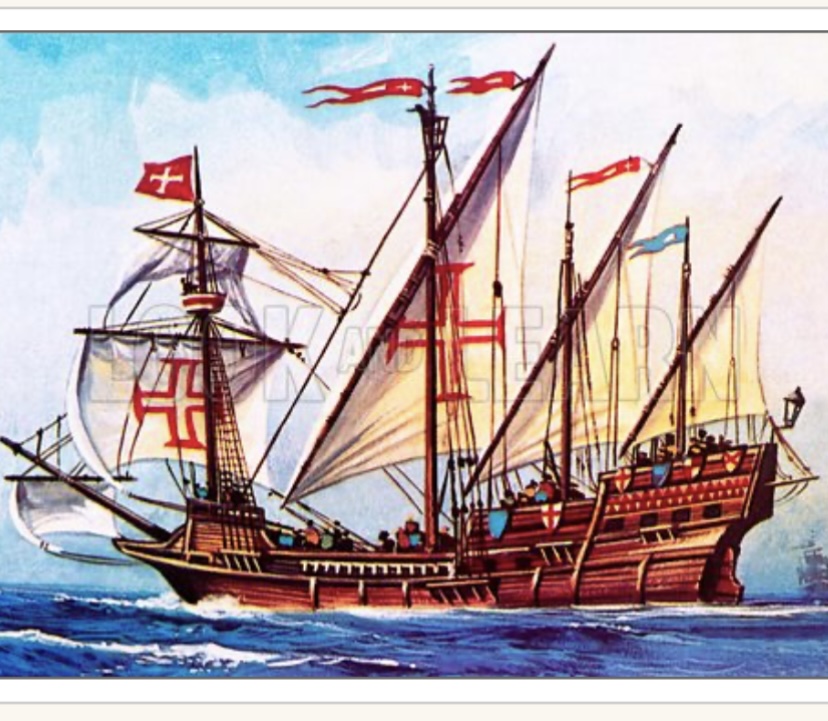
A Portuguese caravel was a small, fast sailing ship developed by the Portuguese in the 15th and 16th centuries, playing a crucial role in the Age of Exploration. It was known for its maneuverability and ability to sail against the wind, thanks to its lateen (triangular) sails. Caravels were instrumental in Portuguese voyages of exploration along the African coast and across the Atlantic.
Strange when I’m sailing Stella Polaris I can’t help think in my small way and replicating these Portuguese explorers. But they had no charts and very rudimentary instruments. They were exceptionally brave sea farers! Sometimes they had to fight with the local war lords specially in south western India. Being only a small country other Europeans muscled in on their trading posts such as the British and the Dutch. But that was at much later stage of European exploration. They were the trail blazers of world exploration. What the Indians, Chinese and Japanese made of these bearded coarse featured big nosed Europeans god only knows? Japanese were very refined featured people yes war like with their Samurai warriors.
The Japaneses believe in etiquette and ritual being highly religious people. The Japanese didn’t want the Portuguese to integrate with locals and were allowed small trading enclaves in islands near the harbours such Nagasaki.
The \”Portuguese enclave\” in Nagasaki was not an enclave in the traditional sense, but rather the artificial island of Dejima, built to confine Portuguese traders and curb the spread of Christianity. Initially, Nagasaki itself served as a Portuguese trading post from 1571 to 1639, becoming a key trade center between Japan, China, and Portugal. However, due to concerns about the spread of Christianity, the Tokugawa Shogunate decided to isolate the Portuguese community on Dejima. Dejima was completed in 1636 and initially housed Portuguese traders, but after their expulsion in 1639, it became the Dutch trading post.
The first Portuguese (and incidentally, Western) landfall on Japanese soil appears to have been in 1543, after a group of Portuguese merchants travelling aboard a trade junk towards China were blown off course to the island of Tanegashima.
Thereafter, trade began between Portuguese Malacca, China and Japan, as the Portuguese took advantage of the Chinese trade embargo on Japan to act as middlemen between the two nations. In 1550, King John III of Portugal declared the Japanese trade a \”crown monopoly\”, and henceforth, only ships authorized by Goa were allowed to make the journey. In 1557 the authorities of Canton (Guangzhou) leased Macauto the Portuguese to support this trade, in exchange for tribute in silver.
The state of civil war in Japan was highly beneficial to the Portuguese, as several competing lords sought to attract the Portuguese \”black ship\” and its trade to their domains. Initially the Portuguese called either at Firando (Hirado) belonging to Matsura Takanobu, or Bungobelonging to Ōtomo Sōrin, but in 1562 shifted to Yokoseura when its lord, Omura Sumitada, offered to be the first lord to convert to Christianity, adopting the name Dom Bartolomeu. In 1564 he faced a rebellion instigated by Buddhist priests and Yokoseura was razed to the ground.
In 1571 Dom Bartolomeu, or Omura Sumitada, granted some land in the small fishing village of Nagasaki to the Jesuits, that was divided into six neighbourhoods, to receive exiled Christians from other territories and the Portuguese traders. The Jesuits constructed a chapel and a college under the name of St. Paul, like those of Goa and Malacca. By 1579 Nagasaki had 400 homes, with a few Portuguese casados (married men).