
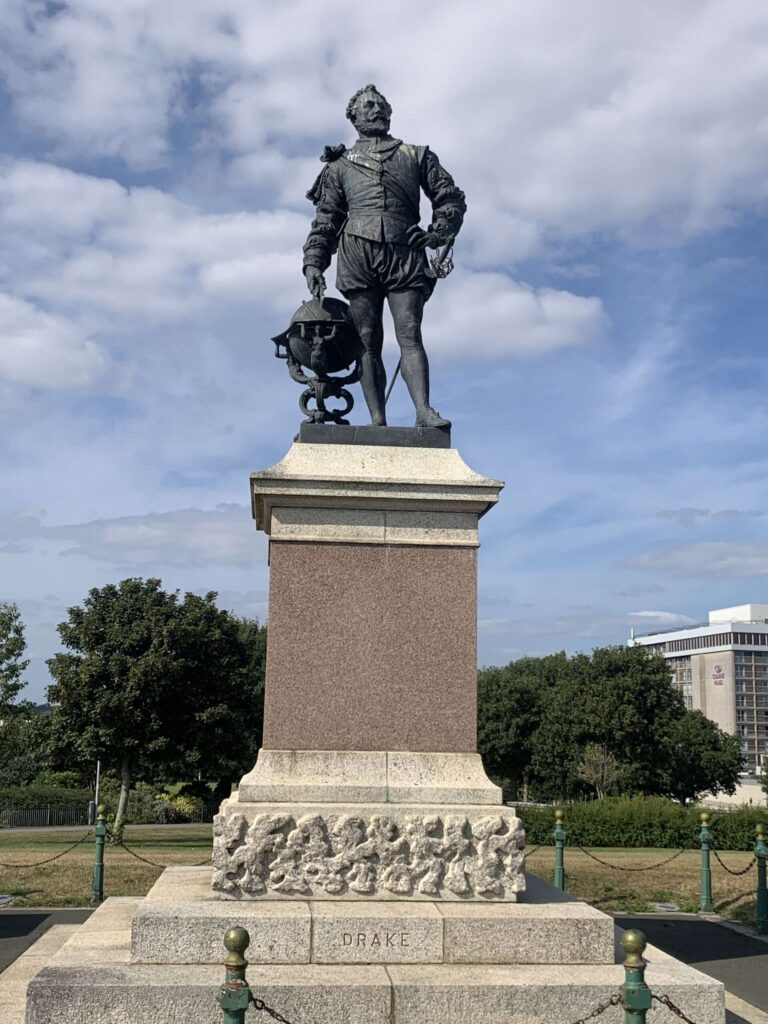
A Golden Hind, led by his art and might, Bare him about the earth’s sea-walled round With the unresisted Roe outrunning flight, While Fame (the harbinger) a trumpe did sound.
That heaven and earth with echos did abound; Echo of Drake a high praise of his name, Name royaliz’d by worth, worth raised by fame. Tell how he bare the round world a ship, A ship, which round the world he bare.
Whose sail did winged Euru’s flight outstrip, Scorning tempestuous Borea’s stormy dare, Descrying uncouth coasts, and countries rare: And people which no eye had ever seen, Save day’s fair golden eye, & Night’s bright Queen.
He that the rich Moluccas had seen He that a newfound Albion descried And safely home again his bark did guide.
Had Ovid know my life as well True tales there would have been to tell How Neptune’s son had spread his wing And around the Oceans drawn a ring; Then into Drake, this Dragon-Knight, Transformed was he (amazing sight!) Thus was I always armed for wars With tail and talons, wings and jaws.
I flow back from Recife Brazil to the U.K. I needed to leave Brazil for one month of time. When I’d arrived I was told by the authorities I was allowed to stay in Brazil for 3 months maximum. It rang a bell in my head I didn’t want to sail down as far as Argentina. My plan is to sail across the south Atlantic Ocean to South Africa and Cape Town. Leaving in the end of November for most favourable weather and wind conditions.
I planned to stay with my new friend I’d met online who lived in Plymouth firstly and then visit my sister in North Wales. I had once spent a short time in Plymouth few years before but I didn’t really know the town. Di my friend was more or less a local girl and was a wondeful host for the two weeks I stayed with her.
We went to where she was born in Cornwall and to Tavistock famous for birth place of famous sailor called Francis Drake. For some reason Drake famous for the battle of the Spanish Armada seem to have deep affect on my psychic!
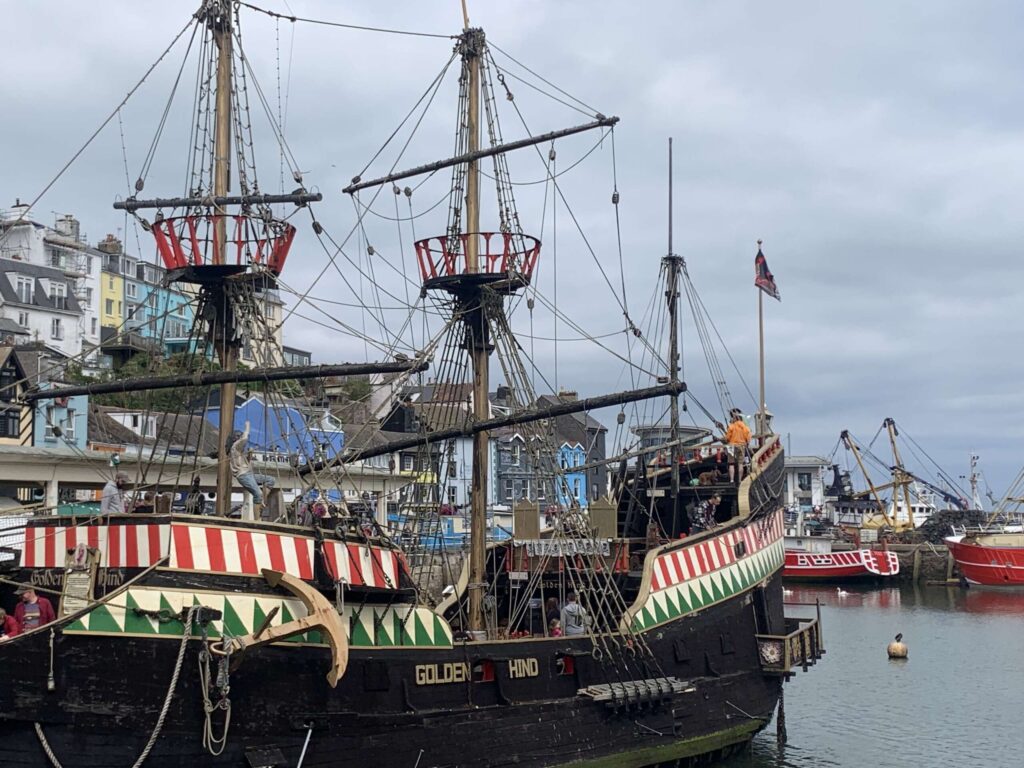
We visited Brixham to see the replica of his ship the Golden Hinde. I guess being an ocean sailor I was able to associate myself with this remarkable Elizabethan sailor. I hadn’t realised that Drake had undertaken a circumnavigation into the Pacific Ocean via the Magellan straits.
I was keen to find out about his voyage which he had to keep secret from the general public, because it was partially a secret reconnaissance to ascertain the Spanish strategic towns and fortifications on the Spanish Main. As this was their new colony of central and South America.. He was commission by Queen Elizabeth 1 of England to undertake this adventure. Which was as a privateer a sort of Corsair and Buccaneer.
The Spanish weren’t a direct enemy in the early reign of the Queen but they were suspicious of England being an heretical nation having at its head a Protestant Queen!
Elizabeth was left with depleted treasury by her father Henry the V111. With his wars and lavish lifestyle. Elizabeth was woman in a male dominated world. In country divided, over the break up of Catholicism, caused by her father’s philandering ways.
She didn’t want the Spanish to know what Drake was up to with his privateering and reconnaissance along the western American seaboard of the Pacific Ocean.
Elizabeth knew through her courtesans spy’s that King Phillip of Spain was a messing a fortune in Seville and Madrid. From Gold and silver being plundered from new Spain on the American continent. Elizabeth’s regency was under constant threat both internally and externally by English and Scottish catholic’s.
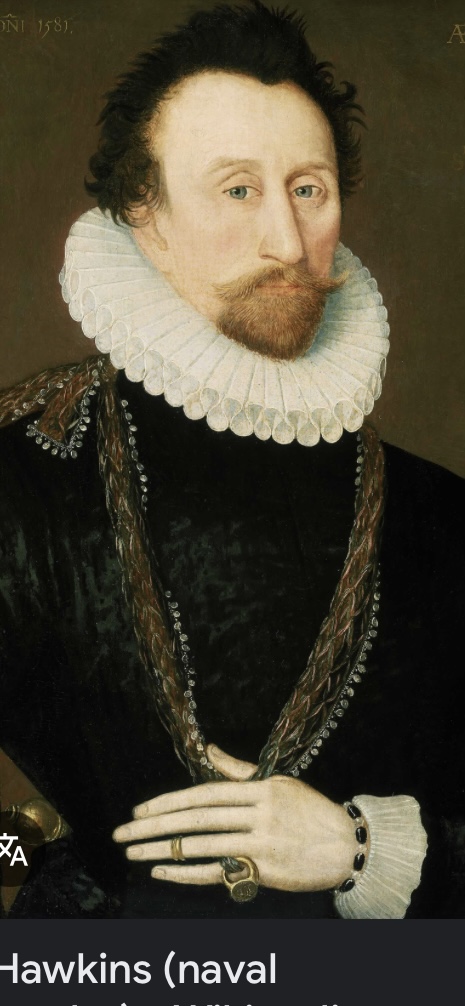
John Hawkins with a young Drake had done some slaving from west Africa to the Caribbean had tried to sell the slaves on the Spanish Main.
In Vera Cruz in the Gulf of Mexico the encounter that really poisoned Anglo-Iberian relations was the Battle of San Juan de Ulúa in September 1568, where a small fleet captained by Hawkins and Drake was ambushed and almost destroyed through Spanish treachery. Only Hawkins in the Minion and Drake in the Judith escaped.
Drake and Hawkins never forgot or forgave, and it was Hawkins who, as treasurer of the navy, began to build the revolutionary fighting ships that would later destroy the old-fashioned heavy fighting galleons of the Spanish Armada.
Drake being a very pious religious Protestant, from that point on, had a visceral hatred of the Catholic Spanish. John Hawkins who became a Vice Admiral and treasurer of Elizabeths Navy learnt a valuable lessons from his encounter and escape from the Spanish at the battle of San Juan de Ulúa.
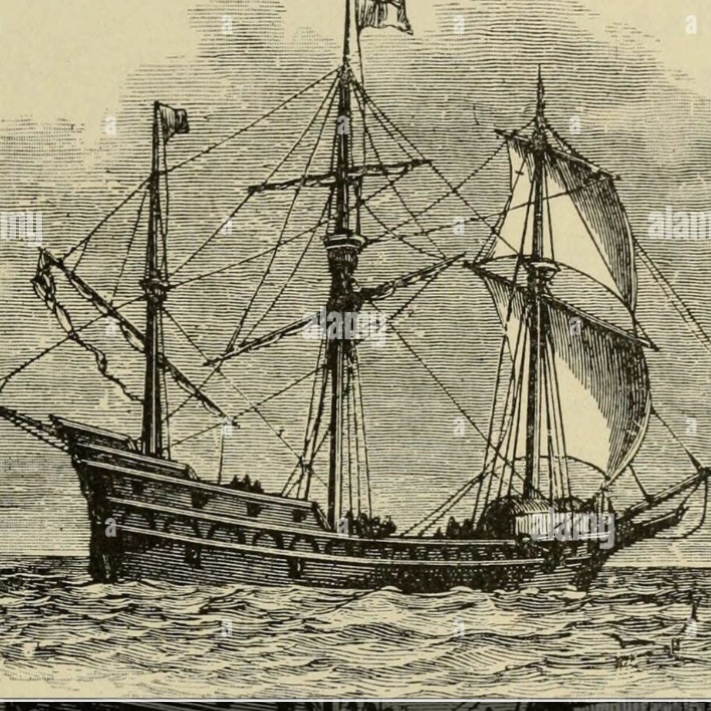
He realised that it was the skill of manoeuvring under sail and rapidity of gunnery that helped them survive that day at Santa Cruz. He got to work at redesigning and streamlining fighting ships with lower freeboard’s reduced castellations. Greater manoeuvrability meant it would make it far more difficult for the Spanish to board the Elizabethan naval ships during any close quarter battle. Plus the rapid fire gunnery practice and the size of guns more importantly the redesigning of the gun carriages for ease of mobility and elevation on the gun decks.
Strange from a near disastrous calamity it forced John Hawkins to rethink conventional sea tactics of the day. How a smaller agile well trained crew in sailing ship with much greater manoeuvrability and gunnery could out fight a bigger lumbering foe.
This was how the British sailors out fought the Spanish Armada who eventually escaped up the North Sea and ran into adverse weather around northern coast of Britain which completely wrecked heavy Spanish lumbering vessels that had already been damaged during melee in the English Channel.
Being a sailor, and rather spiritual, I feel luck was not on the side of the Spanish fleet during the armada. Poor communications, with Spanish soldiers in the Netherlands ill prepared nature of fighting a small nimble sailing force, sticking too rigidly to a plan set out by the Spanish king.
The Armada could have had a very different outcome if the Spanish commanders had taken advantage of favourable weather condition up the channel or even had a preemptive attack on Plymouth. Destroyed Drakes fleet before it was able to leave and raise havoc with its armada.
Drake was commissioned by the Queen to sail up western pacific Spanish Main. It intended as reconnaissance but knowing Drake, it was a way of capturing Heavily laden cargo vessels transporting plundered gold & silver from Chile and Peru. He had to sail south with his small fleet of ships. His voyage started from Plymouth with five ships:
The Circumnavigation 1577 to 1580
The Fleet
- Pelican/Golden Hinde: Drake\’s flagship, the largest of the five ships. It was renamed Golden Hind during the voyage.
- Elizabeth: Commanded by John Winter.
- Marigold: One of the smaller vessels in the fleet.
- Swan: Another smaller ship in the fleet.
- Benedict: The fifth ship that set sail with the expedition.
The fleet left November 1577 to sail to the Mediterranean and Egypt.
1577
Outward Bound
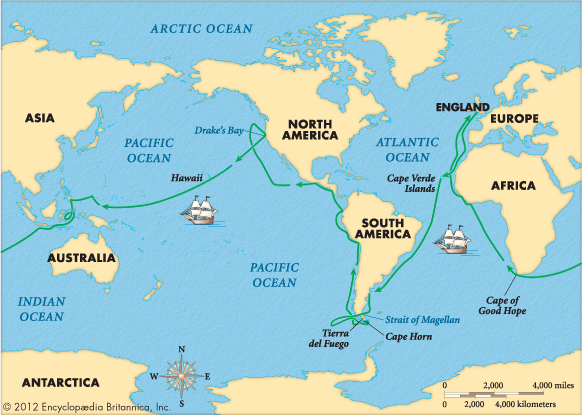
Setting off in November 1577, Francis Drake’s flagship The Pelican, later changed to the Golden Hinde and 4 smaller ships, encountered fierce storms, and the damaged fleet was forced to return to Plymouth. They set sail again in mid- December, with the cover story of travelling to Egypt on a trading mission, in order not to alert Spain to their true goal – raiding Spanish settlements on the west coast of the Americas.
1578
Crossing the Atlantic
After a brief flurry of activity around the Cape Verde islands, which saw them take Portuguese goods, ships and even a pilot, Drake and his crew crossed the Atlantic towards Brazil. They ran out of water and left their barrels open on the decks to collect rainwater to drink. After thwarting an attempted mutiny, encountering some native Americans such as Patagons and Araucanians (sometimes welcoming, sometimes hostile), and breaking up smaller ships to consolidate the fleet, three ships headed into the notorious Straits of Magellan on the tip of South America.
1578
The Pacific
Despite unpredictable winds, whirlpools and shallow waters, the three ships passed through the Strait in just 14 days, by far the fastest passage of that century. Upon entering the Pacific, however, the fleet encountered a truly fearsome storm, which destroyed one ship and its crew. The two remaining ships, The Pelican and the Elizabeth, were carried south and became separated. The Elizabeth got lost in a bank of fog and returned to England. The Pelican was blown 300 miles south of its intended route, leading the crew to discover the passage of ocean below the American continent, previously assumed to be a land mass named Terra Australis. The Pelican eventually turned north, preparing to attack the Spanish coast. It is also believed that around this time, the ship was renamed the Golden Hinde.
1579
Raiding in the ’New World’
The Golden Hinde’s first encounter with the Spanish is a revealing one – Drake and his crew easily overcame the small town of Valparaiso as Spain did not expect pirate activity and were underprepared for any attacks. A messenger on horseback was sent up the coast, warning the Spanish of Drake’s imminent arrival. The Golden Hinde continued north, attacking Spanish ships and ports, often under the cover of darkness. The most lucrative raid the Golden Hinde carried out was on a heavily laden ship called the Nuestra Senora de la Concepcion.
1579
The Northwest Passage
After this, the ship may have sailed as far north as Vancouver Island, in search of the Northwest Passage, an assumed route over the top of North America that would allow more efficient trade between Europe and Asia, but their quest was unsuccessful. With the ship battered and bruised, the crew needed to find coastal shelter to make much-needed repairs.
They eventually landed somewhere in the region of Oregon or California, with convincing arguments for both held by historians. Regardless, the crew’s relationship with the indigenous Miwok tribes seemed to be harmonious, and they stayed here for up to 8 weeks, recouping, repairing, and deciding on their next move. North was already proven to be too dangerous and it could be assumed that armed Spanish ships would be looking for Drake in the south. The decision was made to head west, towards the Moluccas and the Indian Ocean.
1579
The Spice Islands
The ship approached the Moluccas, or the Spice Islands, with some trepidation. It had been colonised by Portugal and was a fiercely defended commercial hub, trading, as the name suggests, in expensive and much sought-after spices such as pepper, cinnamon and cloves. Drake was approached by the Sultan of Ternate, king of a small but wealthy group of islands, who offered him a trade. He would supply Drake with 6 tons of cloves (against the trading stipulation of Portugal) if Drake would provide armed ships for the Sultan to defend his territories. Drake agreed, took the spices, and did not return.
South of Indonesia, the Golden Hinde shuddered to a halt when it hit a reef. Several tons of goods were jettisoned to lighten the ship, including silver, artillery and spices, and the following day they managed to break free and set sail once more.
1580
The Indian Ocean and England
Now came the most challenging test of endurance for the crew – 9,700 miles to the nearest safe port, across the Indian Ocean, around The Cape of Good Hope and anchoring in Sierra Leone. The journey took 118 days, with the malnourished crew that arrived there having just 8 pints of rainwater left to share amongst 56 men. From here, they returned to Plymouth, laying anchor in September 1580. Unable to disembark due to an outbreak of plague, they sailed to Falmouth and eventually to London. There are many opinions over exactly how much treasure the Golden Hinde took, but the Spanish estimated their losses at around £600,000.
A naval seaman was paid per month 6s 8d. Therefore £600,000 would have been an astronomical amount of money in the Elizabethan era.
Drake on one of his last Caribbean attacks on the Spanish Main Panama City he died of a tropical disease or possible through stress of command and failure of his attack on Panama City. The struggles through jungles of the Panama isthmus. He was only in his early 50’s. But the Spanish celebrated his demise the el naval dragon of scourge of the Spanish sailors.
Conclusion
Yes certainly no doubt that Francis Drake was fine sailor and commander of men. He was brave decisive and had a chivalry with his enemies but he could be ruthless when needed. He was a highly focused man nothing would stop him once he set his heart on a plan and goal. He had toughness and fortitude to follow a plan to its end. Basically he was an old fashion adventurer who loved the life of the sea.
The larger picture; he was a man of his times through his sailing exploits he became very wealthy land owner in Devon. Money for certain men drives them for both wealth, status and fame. Sir Francis Drake achieved that in bucket loads. Both for himself and his nation. Elizabeth 1 knighted him he was certainly worthy of her knight hood because he was the ultimate Knight of the sea.
If there’s one thing that test men’s or women’s characters is the vagaries and challenges of the sea!.
https://youtu.be/KmJRWq5g4o8?si=D9XNCHmt5GE6wUSj
The Above is a Film of the building of the replica of the Golden Hinde